The U.S. 50 State Quarters program produced millions of coins, but some state quarter coins can still carry significant value. This guide explains five categories of state quarters that collectors and casual finders should watch for, with practical identification and selling tips.
Why some state quarter coins are worth money
Most state quarters are common and trade for face value. Value increases when a coin is scarce, unusually struck, or in exceptional condition. Collectors pay premiums for clear varieties, proof strikes, and certified high grades.
Understanding the types of valuable state quarter coins helps you spot candidates in pocket change or old rolls.
5 Most valuable state quarter coins to look for
1. State quarter varieties: the Wisconsin Extra Leaf
Variety coins show design differences caused by die damage or hubbing variations. The 2004 Wisconsin quarter is the best-known example. Certain strikes show an “extra leaf” on the corn design that is not part of the regular coin.
These varieties can be worth significantly more than face value when verified by a reputable grading service.
2. Major mint errors: off-center and clipped planchets
Error coins are frequently valuable because they are unusual. Off-center strikes, clipped planchets, or broadstrikes are among the most sought-after errors.
- Off-center strikes: Value rises with the percent of the design missing.
- Clipped planchets: Coins with a noticeable missing edge are collectible.
- Double strikes and severe die breaks: These can also fetch premiums.
3. Doubled die and repunched mintmark varieties
Doubled die varieties occur when the coin die is misaligned during hubbing, producing doubled design elements. Repunched mintmarks (RPMs) show a mintmark that appears stamped more than once.
Both varieties can be valuable to specialized collectors, especially when the doubling or repunching is obvious to the naked eye.
4. Proof and silver proof state quarter coins
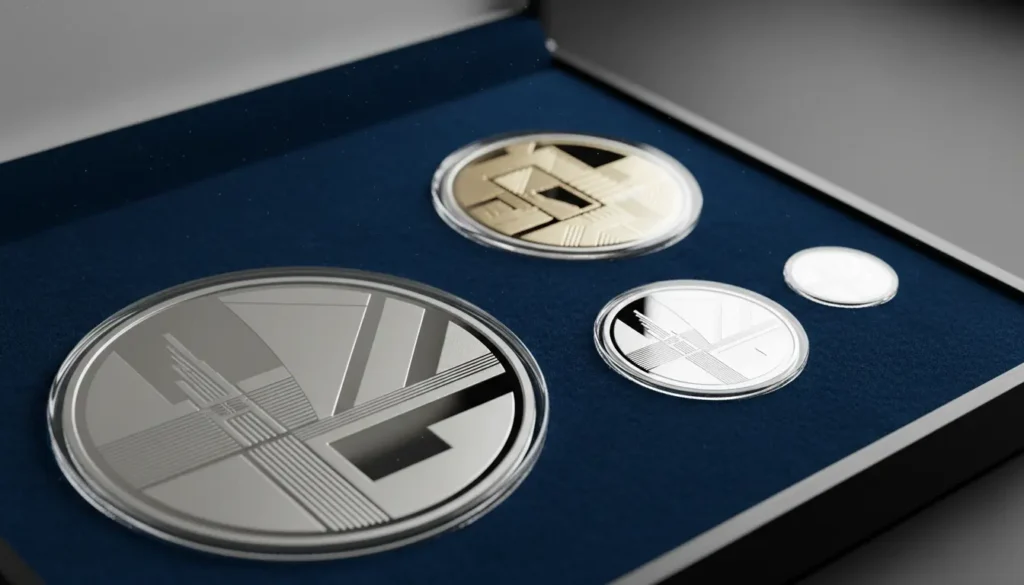
Proof quarters, struck for collectors with polished dies and mirrored fields, come in sets and often contain higher detail. Silver proof quarters (found in special proof sets) contain 90% silver and have value tied to both metal content and collector demand.
Keep original packaging and certificates if you have proof coins, as these increase buyer confidence and value.
5. High-grade mint state quarters (MS65 and up)
Even common state designs can be valuable in top uncirculated condition. Graded MS65–MS70 quarters from the early state program runs can command premiums from collectors seeking complete, high-grade sets.
Professional grading and encapsulation (PCGS, NGC) typically are required to obtain top market prices.
How to spot valuable state quarter coins
Use a magnifying loupe (10x) and a bright light. Look for unusual marks, extra design elements, or missing sections of the design.
Follow these steps:
- Inspect for obvious design anomalies (extra leaf, doubled devices, off-center design).
- Check edges for clipped planchets or irregularities.
- Compare suspected varieties to reputable reference images online or in coin guides.
- Keep suspected proofs and mint-state coins in protective flips to avoid handling damage.
When and how to get a state quarter coin graded
Not every interesting quarter should be graded. Grading costs money, so reserve grading for coins that appear to be rare, very high grade, or clear error/variety strikes.
Tips for grading decisions:
- Submit only coins that are visibly better than typical circulation examples.
- Use an established grading service (PCGS, NGC) and check recent auction prices for similar coins.
- Photograph the coin and get opinions from experienced collectors or local coin dealers before submitting.
How to sell valuable state quarter coins
Options include local coin shops, online marketplaces, auctions, and coin shows. Each has tradeoffs in fees, audience reach, and negotiation flexibility.
Best practices:
- Obtain a professional grade if the coin is likely high value.
- Gather provenance and clear photos to show buyers.
- Compare multiple sale channels to find the best net price after fees.
Case study: a real-world discovery
A collector reported finding a 2004 Wisconsin quarter with the extra leaf variety in a bank roll. After researching images and consulting a dealer, the coin was submitted to a grading service and authenticated as the known variety.
The graded coin sold at auction to a specialist collector. The seller kept documentation of the find and used grading certification to achieve a clear, verifiable price.
Final checklist: What to do when you find a promising state quarter coin
- Handle by the edges and place the coin into a soft flip or tray.
- Photograph both sides under good light and 10x magnification.
- Compare to trusted reference guides and online forums for similar varieties.
- Get a second opinion from a dealer before spending on grading.
- If graded, choose a reputable company and list the coin with clear provenance.
Most state quarter coins are worth face value, but a small number of varieties, errors, proofs, and high-grade strikes can be worth significantly more. Use careful inspection, reliable references, and professional grading when appropriate to maximize value.