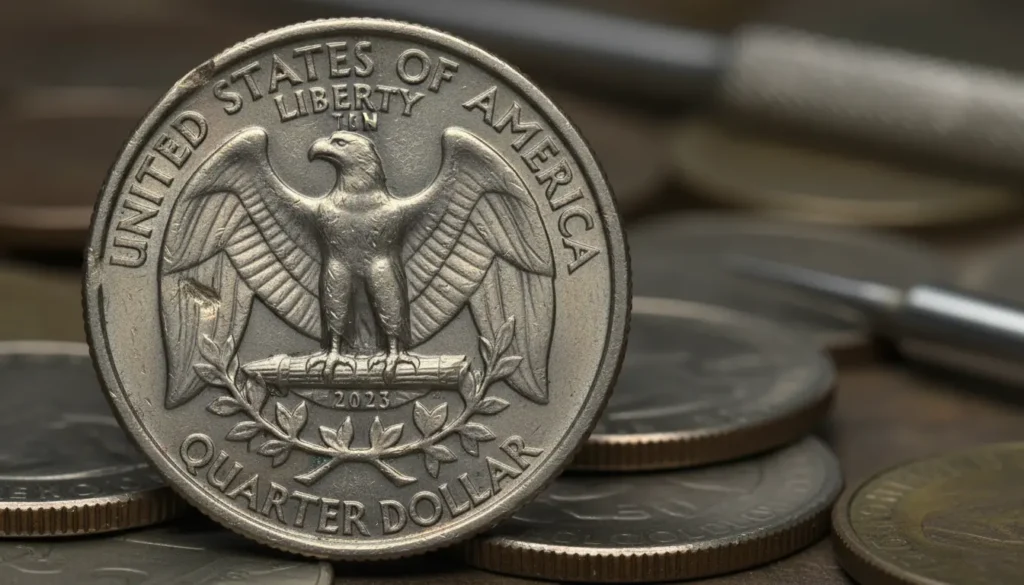
This guide helps collectors recognize, document, and assess coin errors. It focuses on practical identification, grading considerations, and preservation advice you can use today.
Coin Error Guide: How to Identify Coin Errors
Start by examining coins under good light and using a loupe or low-power microscope. Look for irregularities in rims, devices, fields, and lettering that do not match normal strike patterns.
Document observations with photos and notes. Record date, mint mark, denomination, and visible damage or anomalies.
Tools Every Collector Should Use
- 10x jeweler’s loupe for close inspection.
- LED lamp and neutral background for consistent photos.
- Soft gloves, coin holders, and archival flips for handling and storage.
Coin Error Guide: Common Types of Errors
Understanding common error types helps separate valuable mistakes from common damage. Errors are generally created during striking, planchet preparation, or minting processes.
Common Error Categories
- Die Errors — including doubled die, die cracks, die chips, and cud. These arise from wear or damage to the die.
- Strike Errors — such as off-center strikes, broadstrikes, and multiple strikes where the planchet shifted during striking.
- Planchet Errors — clipped planchets, wrong planchet composition, or lamination flaws in the blank metal.
- Minting Mishaps — like collar failures, missing mint marks, or improper annealing that change the coin’s appearance.
How to Grade and Value Error Coins
Value depends on error type, rarity, and condition. A dramatic error on a common date can be worth little, while a subtle die doubling on a rare date may command a premium.
Use these steps to estimate value before consulting an expert or auction results.
Practical Valuation Steps
- Compare with verified reference images from reputable sources or error guides.
- Check recent auction results for the exact error type and date.
- Consider grading submission for high-value items where authentication is likely to increase sale price.
Preservation and Handling Tips from the Coin Error Guide
Proper preservation maintains the coin’s integrity and market value. Never clean error coins with abrasives or chemicals; cleaning often removes patina and lowers value.
Store coins in inert holders, away from humidity and temperature swings. Label each holder with details and any provenance you have.
Quick Safety Checklist
- Handle by the edges with cotton or nitrile gloves.
- Use archival-quality flips or Mylar holders for storage.
- Avoid PVC-containing plastics that can emit harmful residues.
Documenting Errors: Record Keeping in the Coin Error Guide
Good records increase a coin’s marketability and help verify provenance. Keep digital photos, acquisition receipts, and notes on how and where the error was found.
Organize files by year and type, and keep backup copies in cloud storage. Date-stamped photos taken with a neutral ruler or scale help establish authenticity.
When to Seek Professional Authentication
If you believe you have a high-value or historically significant error, professional authentication and grading are worth the cost. Certification can unlock higher sale prices and buyer confidence.
Choose a respected grading service and request raw or encapsulated grading depending on your selling plans. Expect turnaround times and fees to vary by service and submit volume.
Signs to Submit for Professional Review
- Unusual doubling or die breaks on rare dates.
- Errors that appear consistent across multiple coins (suggesting a die issue).
- High-grade examples with minimal wear.
Case Study: 1955 Doubled Die Lincoln Cent
The 1955 doubled die Lincoln cent is a well-known example of how an error can become iconic. The doubling on the obverse is bold and easy to spot without magnification.
Common, worn examples often sell for modest premiums, while high-grade, certified pieces have sold for tens of thousands and sometimes over $100,000. This gap shows how condition and certification affect value.
Simple Steps to Start Collecting Error Coins Today
Begin by learning to spot basic errors on common dates. Use online forums and reference books, and attend local coin shows to compare notes with other collectors.
Buy quality reference guides and start a small, documented collection focused on a single error type or series. Over time you will learn to identify rarer and more valuable mistakes.
Checklist for Beginners
- Acquire a 10x loupe and a neutral LED lamp.
- Follow a trusted reference (books, auction archives, numismatic articles).
- Join a local club or online forum to discuss potential finds and verify identifications.
The Coin Error Guide Every Collector Needs is about careful observation, good records, and informed verification. With these skills you can confidently add error coins to your collection and make better buying or selling decisions.